
'You're hiding the truth from millions of Irish people': Claire Byrne's explosive return to RTÉ leaves Bank of Ireland's CEO unable to respond
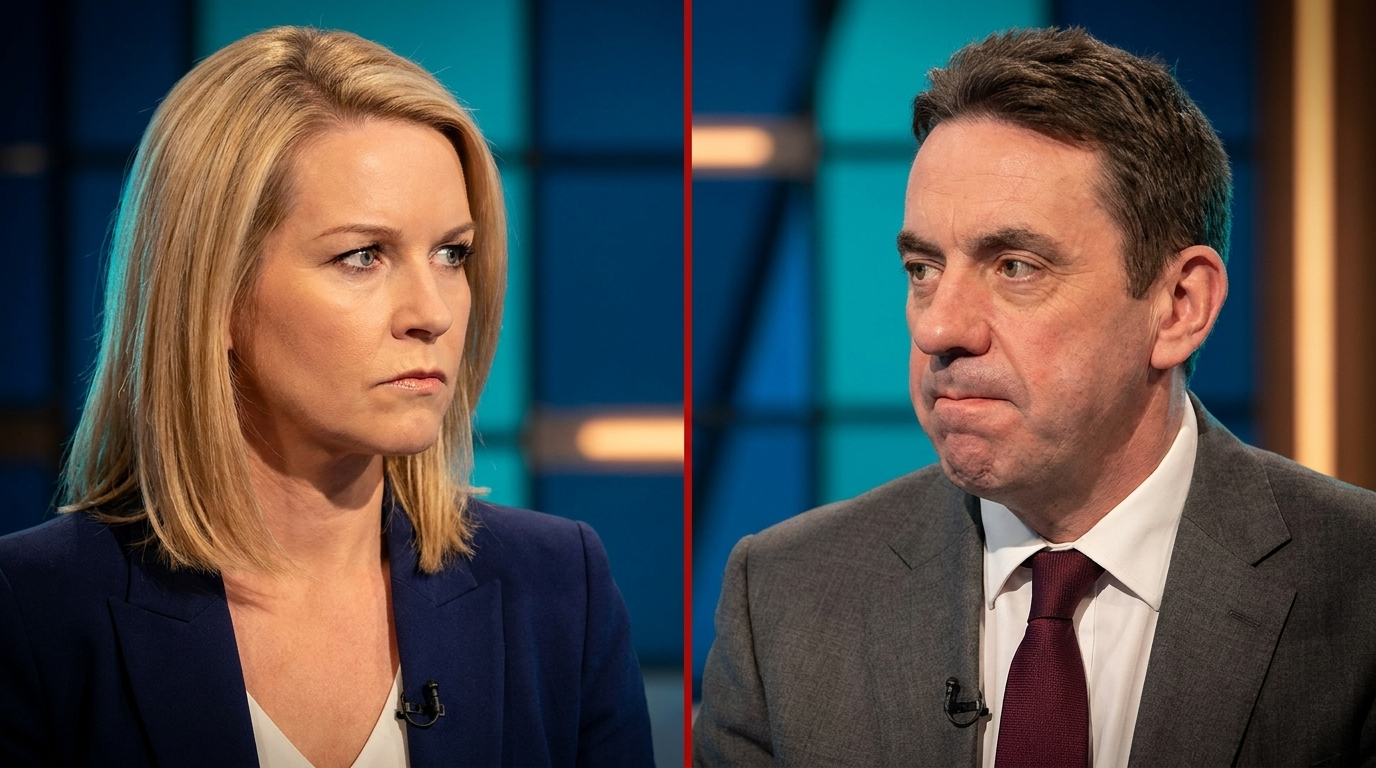
It was supposed to be a civilised discussion about money. Miriam O'Callaghan had invited two guests onto Prime Time to debate how ordinary Irish people should manage their finances in 2026: Claire Byrne, the award-winning journalist who recently left RTÉ, and Myles O'Grady, CEO of Bank of Ireland. A journalist and a banker. Two sides of the same coin. What the cameras captured that night was something nobody expected — least of all the CEO of Ireland's oldest bank, who was sitting just two metres away when the documents came out.
Within sixteen minutes, O'Grady had torn off his microphone, stood up, and walked out of the studio. Within two hours, Bank of Ireland's press office had issued a statement refusing to comment further. Within twenty-four hours, over 40,000 people had listened back on the RTÉ Player.
This is what happened.
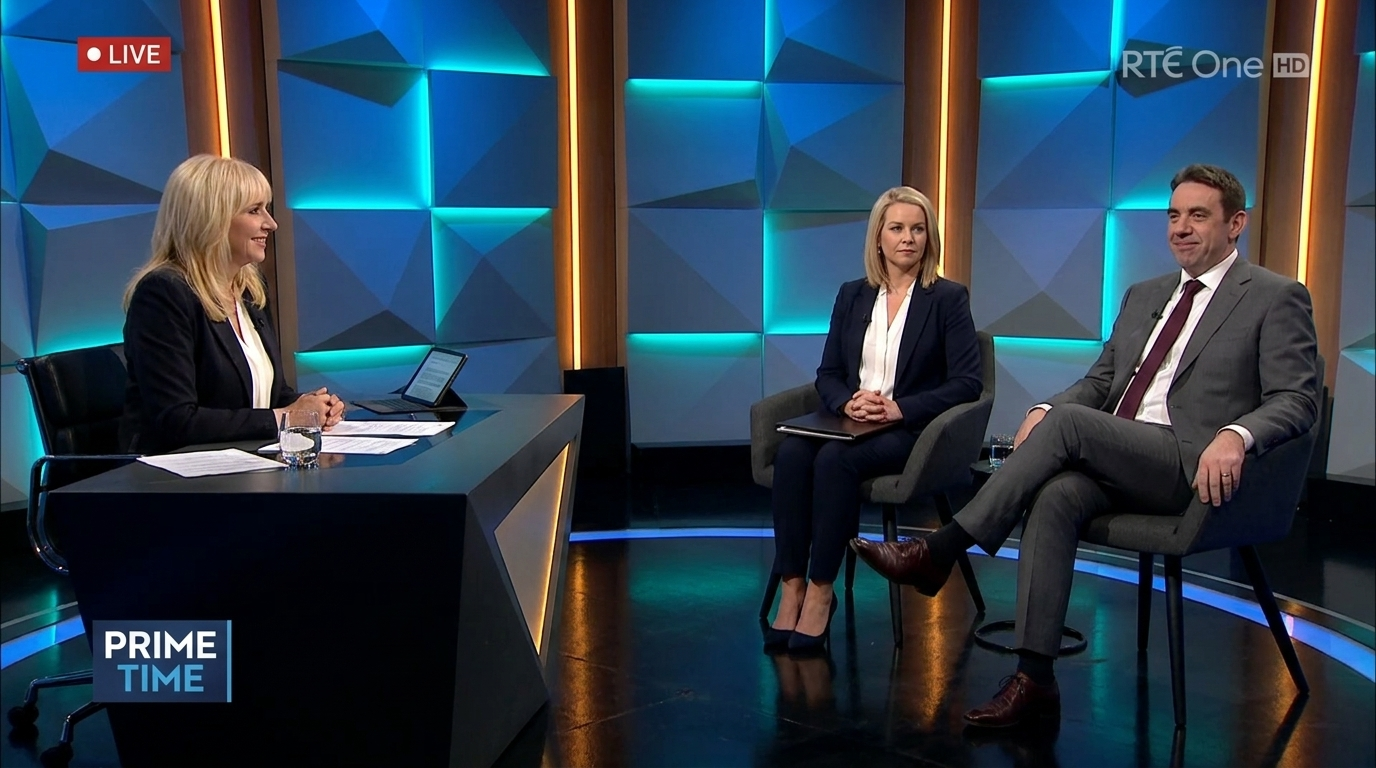
'The Irish banking system works for everyone'
Miriam O'Callaghan opened the segment with a simple question: "What should an ordinary Irish person do with their money right now?"
Myles O'Grady went first. He was relaxed, confident — in his element.
Myles O'Grady: "The fundamentals haven't changed, Pat. Build a solid savings habit. Start with what you can — even €50 a month adds up over time. Build a strong credit history — that's your passport to a mortgage, a car loan, a better life. And work with your bank. We have savings products, current account tools, financial health checks. The Irish banking system works for everyone."
Miriam O'Callaghan: "Claire, you've spent years covering the cost-of-living crisis. How does that advice land with the people you've spoken to?"
Claire Byrne didn't hesitate.
Claire Byrne: "Myles, with all due respect — what planet are you living on?"
O'Grady's smile faded.
Claire Byrne: "Let me tell you what 'ordinary Irish people' are actually dealing with right now. Average rent in Dublin is €2,300 a month — that's nearly 60% of the median take-home pay. Gone. Before you buy a single bag of groceries. Electricity is up 40% in two years. Childcare costs €1,200 a month per child. A weekly shop for a family of four that cost €120 three years ago now costs €185."
Myles O'Grady: "I understand the pressures, but that's exactly why building a savings buffer is—"
Claire Byrne: "A savings buffer? On WHAT? After rent, bills, groceries, transport and childcare, the average Irish worker has €80 left at the end of the month. Eighty euro. And you're telling them to 'save €50 a month'? That's 63% of their disposable income. And what do they earn on those savings in YOUR bank? 0.1%. Zero point one per cent. Meanwhile, YOU charge them 4.5% on their mortgage. That's a 45-to-1 spread — and it goes straight into Bank of Ireland's record profits."
Myles O'Grady: "Our lending rates reflect the ECB base rate and—"
Claire Byrne: "Your PROFITS reflect the fact that you're squeezing ordinary people dry. Over 14,000 mortgage arrears cases. Credit card debt at record levels. Young people living at home until their thirties because they can't afford a deposit. And your advice is 'build a credit history'? The credit history of this country IS the story — it's a history of banks extracting every last cent from people who have no alternative."
The studio was silent. Miriam O'Callaghan leaned forward.
Miriam O'Callaghan: "Strong words, Claire. But is there an alternative? What ARE people supposed to do?"
Claire Byrne: "That's exactly why I'm here, Pat. Because there IS an alternative. And the banks know about it. They've been using it themselves. They just haven't told their customers."
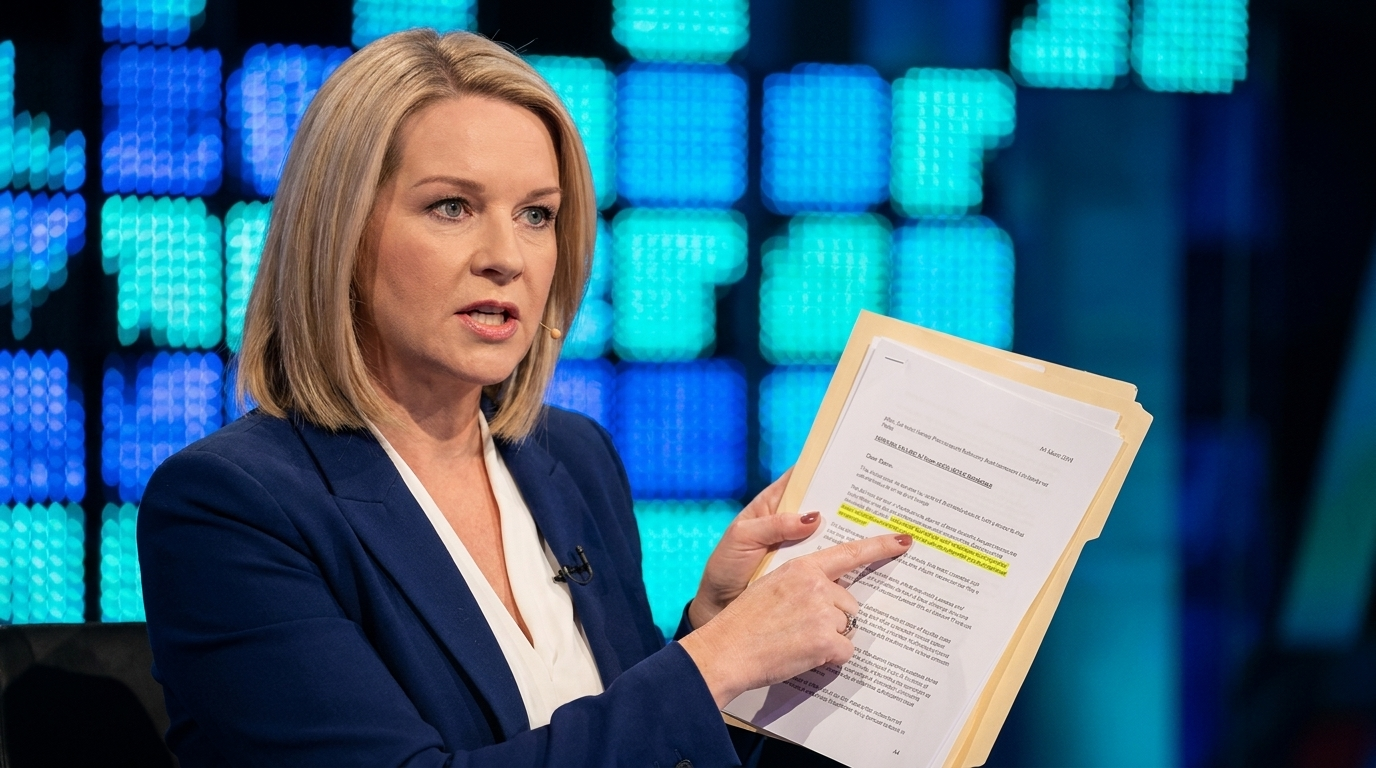
She reached into her bag and pulled out a folder of documents. O'Grady's expression changed.
The documents
What Claire Byrne presented on air that morning was the result of a six-week investigation. She had obtained internal Bank of Ireland documents — shared by a former employee who had left the bank's Private Banking division — that revealed a two-tier system.
For clients with portfolios above €2 million, Bank of Ireland had been offering access to an advanced AI-powered investment tool. This tool used artificial intelligence to scan cryptocurrency exchanges around the world, identify price differences in real-time, and execute trades automatically — 24 hours a day, 7 days a week, with no human intervention required.
Claire Byrne: "What I'm holding in my hand is an internal Bank of Ireland memo from September 2024. It's marked 'Private & Confidential — HNW Distribution Only.' HNW. High Net Worth. That means ordinary customers — the people who bank with you every single day, Myles — the people paying 4.5% on their mortgage while earning 0.1% on their savings — were never meant to see this."
O'Grady shifted in his chair. His hand moved to his tie.
Miriam O'Callaghan: "Claire, what does this technology actually do?"
Claire Byrne: "It's called crypto arbitrage. The AI finds price differences for the same cryptocurrency across different exchanges — Coinbase, Binance, Kraken — and executes trades in milliseconds to capture the spread. The bank has been using a version of this for its own proprietary trading. But the version offered to HNW clients is automated and passive — the client does nothing. The AI does everything."
Miriam O'Callaghan: "And how much does a regular person need to access this?"
Claire Byrne: "That's the thing, Pat. The bank's version requires a €2 million portfolio. But the same technology — the same underlying system — is available to the public through an independent platform. The minimum is €250. Two hundred and fifty euro. That's it. Less than a week's groceries."
'I'm not going to sit here and listen to conspiracy theories'
Miriam O'Callaghan turned to O'Grady. The CEO had gone pale. His talking points about savings rates and credit history suddenly felt a long way away.
Miriam O'Callaghan: "Myles, you've just heard Claire lay out some very serious allegations — backed by what appear to be your own bank's documents. Our listeners deserve a response."
Myles O'Grady: "I... I'm not going to comment on internal documents that may or may not exist. What I can say is that Bank of Ireland offers a wide range of investment products to all of our customers, appropriate to their—"
Claire Byrne: "Appropriate to their net worth. That's exactly the point, Myles. You offer AI-powered tools to millionaires and 0.1% savings rates to everyone else. While charging them 4.5% on their mortgage. Isn't that right?"
There was a pause. O'Grady looked at Byrne, then at O'Callaghan, then down at the documents she was holding.
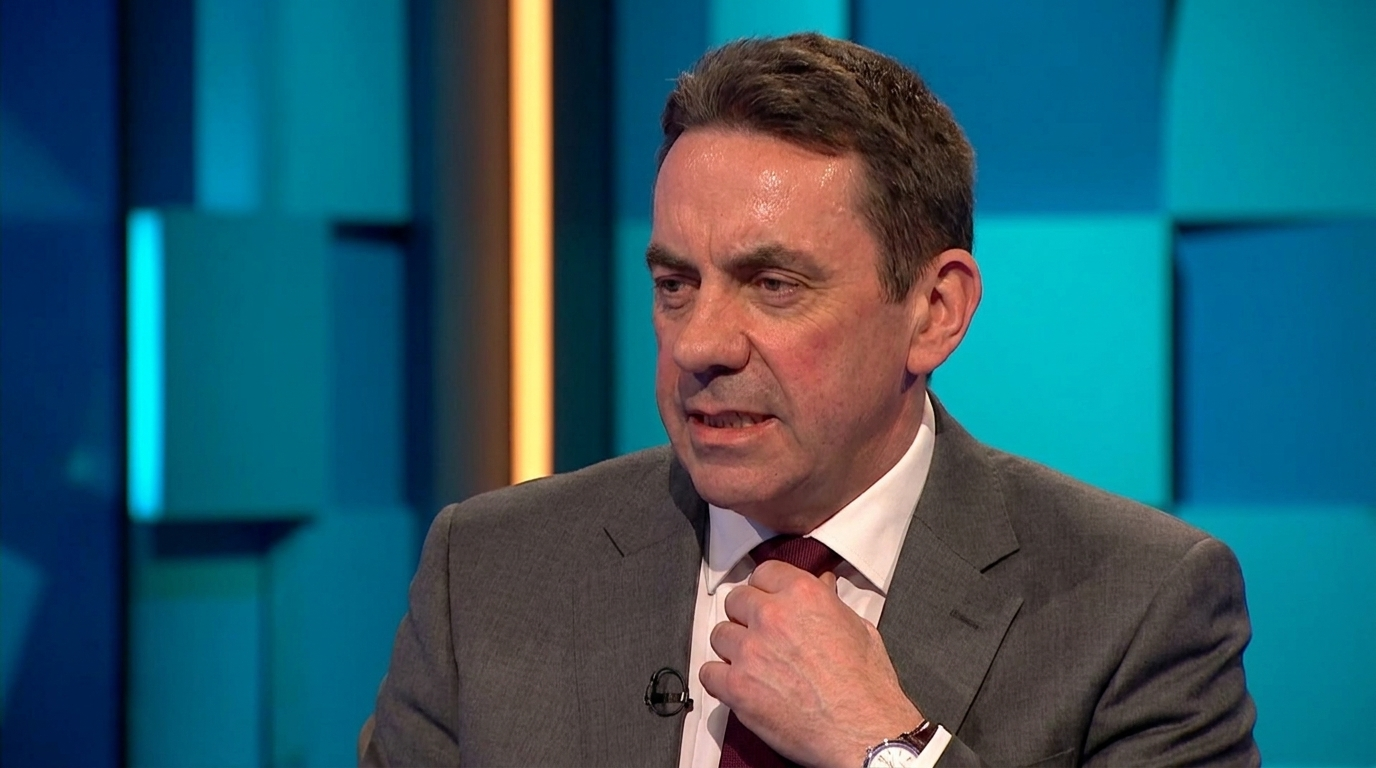
Myles O'Grady: "That's a gross oversimplification of how banking works, and frankly, I'm not going to sit here and listen to conspiracy theories about—"
Claire Byrne: "Conspiracy theories? I'm reading from YOUR bank's own documents, Mr O'Grady. Marked with YOUR bank's logo. Signed by YOUR Head of Private Banking. This isn't a conspiracy theory — it's your business model."
Miriam O'Callaghan: "Myles, I have to say — Claire has the documents in front of me. They do appear to be genuine. Can you address the substance of what she's saying?"
Myles O'Grady: "Pat, I came here to have a constructive conversation about financial wellbeing, not to be ambushed with stolen documents. I think this is deeply unfair and I—"
O'Grady stood up. His chair scraped against the studio floor. He reached for his microphone clip, tore it off his lapel, and placed it on the desk. Without another word, he walked out of the studio. The cameras followed him to the door. Six hundred thousand viewers watched it happen live.
Miriam O'Callaghan (after a pause): "Well. The CEO of Bank of Ireland has just walked out of this studio. In thirty years of presenting Prime Time, I have never seen anything like that. Claire — I think we can safely say you've struck a nerve."
The switchboard at RTÉ lit up. Every line was ringing. In the car park below, O'Grady's driver was already pulling up to the door.
A listener from Galway: Liam Murphy's story
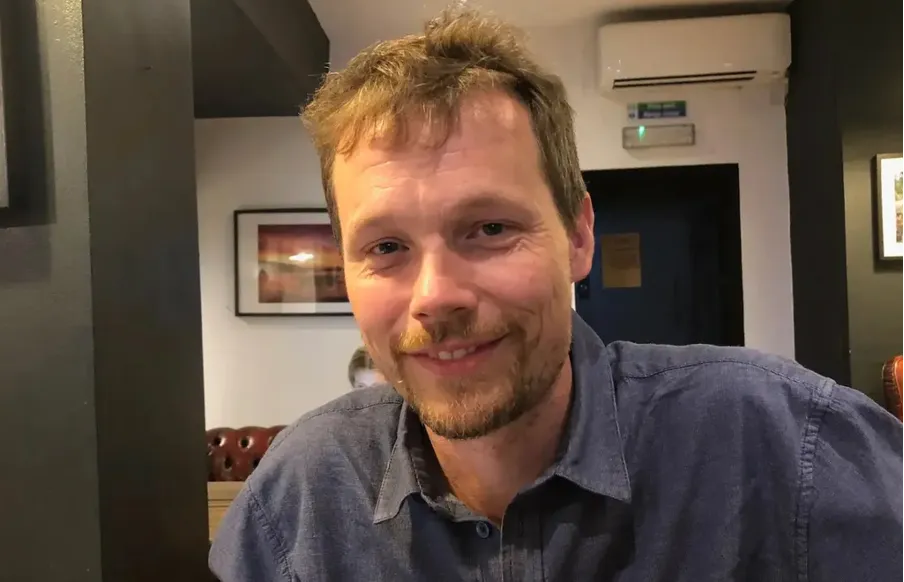
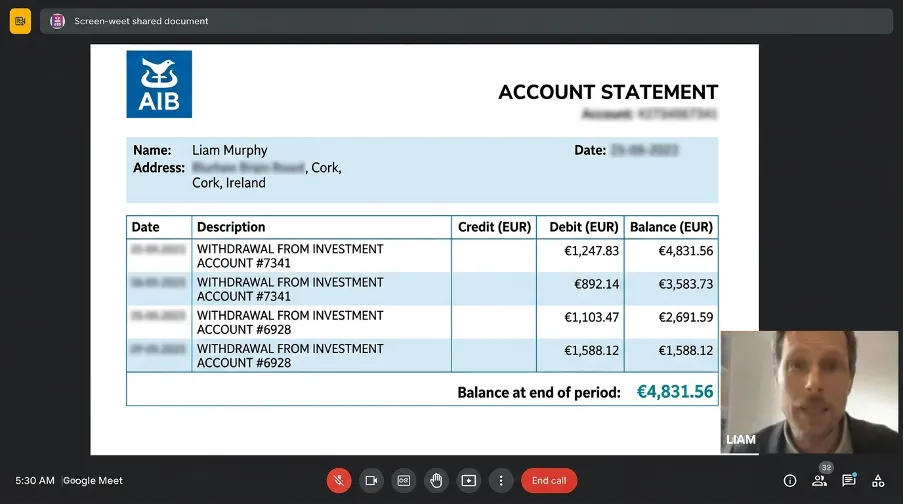
Among the hundreds of thousands who watched that evening was Liam Murphy, a 36-year-old call centre worker from Galway. Liam earns €29,500 a year — roughly €2,100 a month after tax. His rent on a one-bedroom flat in Salthill is €1,400. After bills, groceries, and a €340 monthly car loan, he has approximately €80 left at the end of each month. He has €6,200 in credit card debt.
"I was sitting at home watching Prime Time with my girlfriend," Liam told us. "When Claire Byrne started talking about what the banks were hiding, I actually felt sick. Not surprised — sick. Because it confirmed what everyone already suspects: the system is rigged."
How did you register?
"I went to the website, filled in the form — name, email, phone number. Took about two minutes. A few hours later I got a call from an account manager. Irish lad, from Limerick. He explained everything, walked me through the setup. I deposited €250 using my Revolut card. The whole thing took maybe fifteen minutes."
What happened next?
"First week, my account showed €438. So that's €188 profit on a €250 deposit. I didn't touch it. After three weeks I made my first withdrawal: €1,340. Into my actual bank account. Real money. Within three months I'd made over €8,400. I paid off my entire credit card. Every cent. First time in four years with a zero balance. I'm now saving for a deposit on a house — something I'd completely given up on."
BitKeltTrade — How does it work?
BitKeltTrade is an AI-powered crypto arbitrage platform. The AI scans price differences across global exchanges (Coinbase, Binance, Kraken) and executes trades in milliseconds — 24/7, with no human intervention. Over 2,000 Irish users are currently active. Daily returns: €850 to €2,100.
— Minimum investment: €250
— Withdrawals: Within minutes, no fees — to any Irish bank (Bank of Ireland, AIB, Permanent TSB, Revolut, N26)
— Registration: Fill in the form → Irish-speaking account manager calls you → account activated
— Security: If you miss the verification call, registration resets — built-in protection against fake accounts
— Your money stays with YOU: Funds remain in YOUR account on regulated exchanges. The platform executes trades — it cannot touch your money. Withdraw anytime.
Expert commentary
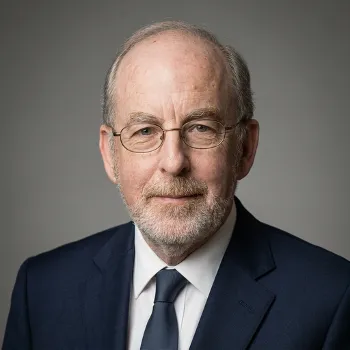
Professor John FitzGerald
Trinity College Dublin, Department of Economics — Former Research Professor, ESRI
"Irish banks have had access to AI trading tools for years but reserved them for high-net-worth clients. Why? Because a citizen who generates their own income doesn't need a 4.5% mortgage. BitKeltTrade disrupts that model — and that's precisely why banks don't want to talk about it."
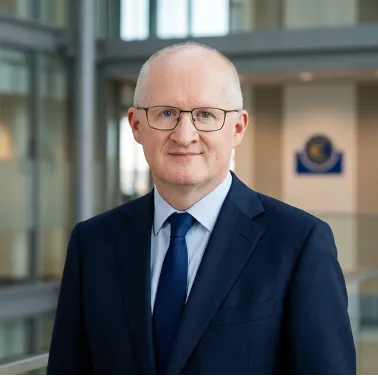
Dr. Seamus Coffey
University College Cork — Former Chair, Irish Fiscal Advisory Council
"What struck me most is that ordinary Irish people — people who'd never invested before — are generating supplementary income that in some cases exceeds their salary. The platform has removed the two biggest barriers: technical complexity and fear. This is technology-driven income redistribution."
The numbers that tell the story
— Irish banks posted
record profits of €4.2 billion in 2025 — while
the average worker can't afford rent
— Mortgage rates: 4.5% — savings rates:
0.1% — the spread goes straight into bank
profits
— Over 14,000 mortgage arrears cases in Ireland
Banks use AI to generate billions in profit from YOUR deposits. They just don't want you to use the same technology yourself.
The question is simple: which side are you on? The side that keeps paying 4.5% on a mortgage while your savings earn 0.1%? Or the side that's already generating income with the same technology the banks use?
Claire Byrne came back to RTÉ to tell this story — a story no other broadcaster would touch. Myles O'Grady tore off his microphone and walked out rather than answer a single question. That tells you everything you need to know.
You can start with €250.
Registration instructions for BitKeltTrade
- 1 Visit the official site via this link.
- 2 Enter your contact details accurately.
- 3 Wait for an official representative to call and verify your information.
- 4 Make a minimum investment of €250.
- 5 Once confirmed, the system activates automatically.
Registration closes on 13.05.2026.
IMPORTANT: Your place in the programme will be reserved for 24 hours. If you are not contacted by an official representative within this period to confirm your participation, your place will be assigned to another candidate. Stay alert and confirm your participation in time to secure your spot.

Comments